Albuquerque NM and Omaha NE
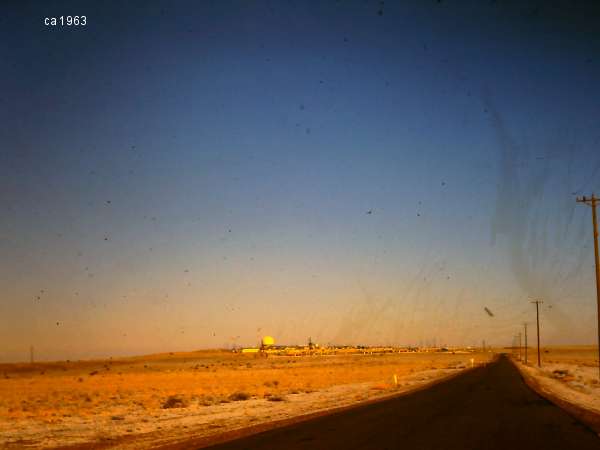
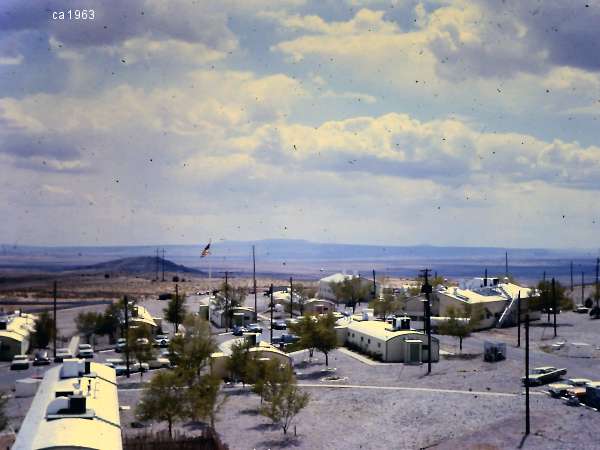
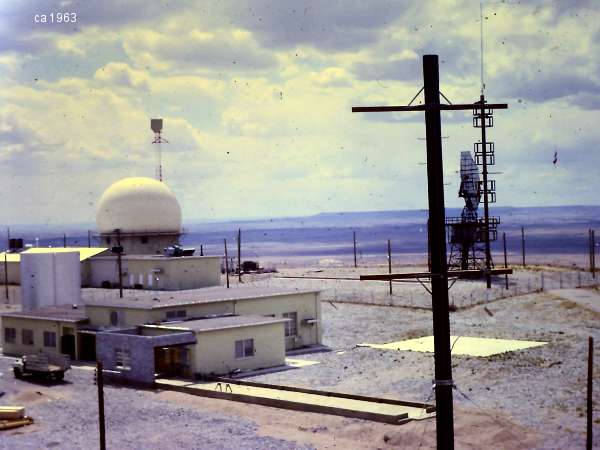
687th AC&W Squadron West Mesa Air Force Station New Mexico.
New Mexico and a New AF Specialty
In August 1963, my family and I moved again, this time to the 687th AC&W Squadron at West Mesa Air Force Station in New Mexico. The radar site sat about 15 miles from Albuquerque’s city limits. We were fortunate to receive family housing on Sandia Laboratory Military Base, which gave us access to the military hospital, base exchange, and commissary. The commute to my duty station was relatively short and manageable compared to my previous assignments. The Albuquerque area offered countless opportunities for family life and recreation. We went to movie theaters, took weekend drives into the Sandia Mountains for skiing, and enjoyed camping and fishing trips. The breathtaking scenery made this one of the more enjoyable assignments of my career.
At that time, Julie was three years old and Yvonne was just one. Too young for school, they kept Madeline busy at home while I was at work. Living on Sandia Base meant being surrounded by other young families facing the same challenges of raising small children while balancing military life. Madeline adapted quickly, finding comfort in friendships with other mothers, sharing advice, and relying on the support of the community. Julie and Yvonne loved to play outdoors and called the backyard the “Mesa.” Having medical facilities, shopping, and a sense of belonging nearby was a great relief for Madeline after the difficulties of more remote postings. Our children were at an age when every day brought new experiences. Julie loved exploring the outdoors, with Yvonne following close behind, full of curiosity. Madeline often took them to the playgrounds on base, where they made friends and enjoyed the safety of a military environment.
We spent our evenings together as a family, whether reading bedtime stories, attending base events, or simply enjoying a quiet night at home. Although my work schedule kept me busy, I tried to make the most of our time together. On my days off, we explored Old Town Albuquerque, with its historic plaza, adobe buildings, and small shops that reminded me of my family’s Mexican heritage. We visited local parks and often drove into the mountains for picnics. These outings gave us a sense of adventure while keeping us close as a family. That assignment marked an important turning point in my career, but it also brought us much-needed stability. After the hardships of isolation and separation in earlier postings, New Mexico allowed us to live more like a “normal” family. We finally settled into a routine that balanced my career responsibilities with our family traditions. Madeline and I cherished this time, and it strengthened our marriage as we raised our children together. Everything felt normal until October 16, 1962, when everything changed. At about 2:00 a.m., I was awakened by a recall telephone call. The caller simply said, “Alert! Alert! This is no-drill recall. Report as soon as possible.”
I drove around picking up other airmen at their homes, and together we headed to West Mesa. When we arrived, we were shocked to see security police in full battle gear, heavily armed. Even though they knew us personally, we still had to show identification before being allowed entry. I knew immediately that something serious was happening. Once inside, we reported to the briefing room and were informed that we were now at DEFCON 3, only two steps away from all-out war. It was the beginning of what became known as the Cuban Missile Crisis. Our briefing covered air defense duties, weapons deployment, and strict orders to have no communication with the outside world. A liaison officer was assigned to speak with our wives and provide support in case of emergencies.
For Madeline, those weeks were especially difficult. She had two small children to care for, no information about where I was, and the constant fear that war could break out at any moment. I now understand how strong she had to be to manage everything on her own during that time. Because I held a Top-Secret clearance and was fluent in Spanish, both reading and writing, I was selected for a special activities’ unit at Patrick AFB, Florida. I was instructed never to talk about what my role was during the crisis. I was gone from October 16 to November 29, 1962. Looking back, I believe this was one of the hardest periods in Madeline’s life. She had no idea where I was and had to face the possibility of war completely on her own.
After the Cuban Crisis, operations at the site eventually returned to normal. Along with one officer and about six airmen, I was assigned to work at the FAA Albuquerque Center to help familiarize FAA personnel with our radar operations. The FAA was installing radar equipment nationwide, and many of their people did not yet have the experience the Air Force had in radar-based traffic control. I remained at the FAA Center until my next assignment; it was excellent duty.
Once again, the Air Force requested that radar sites reduce personnel because of the implementation of the SAGE system. We airmen were offered the option to retrain into Security Police or Cooks. Since most of us were already qualified in both Auto and Manual radar systems, we held out for better opportunities. Eventually, we received a message that allowed certain qualified personnel to retrain as computer operators. Selected personnel would attend a 12-week course in Texas and, upon completion, be assigned to new duty stations. I applied and was selected to attend in July 1963. Once again, Madeline and the children left for California while I headed to Sheppard AFB, Texas. There, I trained on the NCR 315, the computer used by the USAF in the early 1960s.
The main course focused on using plugboards to configure and control the machines. Plugboards allowed us to connect different input and output lines manually, creating a flexible way to route signals through the system. We learned to operate and program the NCR 315 using a patch board system, which allowed us, as operators, to manually configure the computer’s circuitry for different tasks by connecting wires or jumpers on the board. A plugboard typically consisted of a panel with multiple sockets, each connected to a specific function or component of the machine. We learned how to connect cables between these sockets to define how data or signals would flow through the system. We configured plugboards to perform arithmetic operations—addition, subtraction, multiplication, and division—data routing between memory locations and output devices, and logic operations such as AND, OR, and NOT. One of the main advantages of plugboards was their reconfigurability. We could quickly change the connections to alter the machine’s behavior without redesigning or rewiring the entire system. Even though I was away in training, I often thought about the sacrifices Madeline made. She moved back and forth with the children, managed their needs, and maintained her strength while I pursued career opportunities.
Her resilience gave me confidence that we could endure the demands of military life. I completed training in October and, by November, I reported to my new duty station: the 544th Air Reconnaissance Technical Wing at SAC Headquarters in Omaha, Nebraska. This marked another transition for our family, but the lessons we had learned in New Mexico stayed with us—the importance of stability, the joy of family traditions, and the strength we drew from one another.
Omaha Nebraska
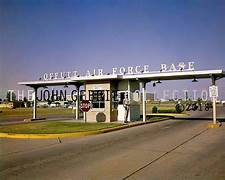
544th ART Wing Offutt AFB Nebraska
Omaha Nebraska
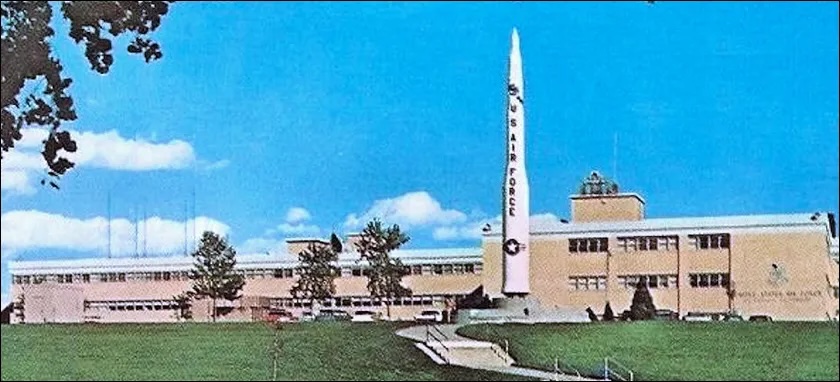
In late October 1963, I arrived at Offutt Air Force Base in Nebraska and reported to my new duty assignment with the 544th Aerial Reconnaissance Technical Wing. This unit played a crucial role in aerial and technical intelligence gathering for Strategic Air Command (SAC) and the United States Air Force. Offutt was SAC’s headquarters, and I felt the sense of importance and responsibility the moment I stepped onto the base. My initial assignment was to serve as a computer operator in the intelligence computer room, but before I could begin, I had to obtain a special security clearance. While I waited for approval, I was placed in a casual squadron within the wing, a temporary holding unit for new arrivals while paperwork and background checks were completed. During this waiting period, an unexpected opportunity came up: all new computer operators were offered a chance to attend IBM 1401 programming school at the IBM Systems offices in Omaha. I applied immediately and was fortunate enough to be selected.
The course lasted six weeks, and I became fascinated by this new and emerging field. The IBM 1401 was one of the earliest business computers, and learning to program it felt like stepping into the future. At the end of the course, IBM instructors evaluated our performance, and based on those results, a select few of us were chosen to continue advanced training on the IBM 7094, a much more powerful system used for scientific and technical calculations. This training included FORTRAN, one of the first high-level programming languages, and once again I made the cut and was selected to stay on the programming track—something that would shape my future in ways I never imagined.
When Madeline, our daughters Julie and Yvonne, and I arrived at Offutt, we were told that base housing would not be available for at least sixty days. With little choice, we rented a small place in Bellevue, Nebraska, on a month-to-month basis. Madeline and the children settled in quickly and made friends with the neighbors while I focused on my studies. Our classes were held at IBM Federal Systems in downtown Omaha, so I commuted each morning from our home into the city. At first the fall weather was pleasant, but when winter arrived, snow and ice made driving difficult and sometimes dangerous. Even so, I stayed focused, knowing that this education would be invaluable not only to the Air Force, but to my own professional future. The Air Force required us to wear a coat and tie while working or attending class at IBM, so we all wore civilian clothing downtown. All programmers assigned to the 544th ARTW who had not yet received their security clearances were temporarily assigned to IBM Federal Systems, and I spent an entire year there, gaining hands-on experience with programming and operating systems that would serve me throughout my career.
Eventually, we moved into base housing. The building was a long structure divided into four units, and we were assigned a comfortable three-bedroom apartment. Almost immediately, we noticed that our neighbors seemed to avoid us, and for nearly three months no one spoke to us. I finally asked one neighbor, Bob Forgas, why everyone kept their distance, and he admitted that most people assumed I was some kind of special investigator because I wore civilian clothes to work and rode in a military vehicle every day. Ironically, it was Julie who broke the ice. She and Yvonne were playing in the common area when Julie offered Carol, Bob and Margaret’s daughter, a freshly made tortilla from Madeline’s kitchen. Carol took it home, and at first Margaret was upset that her daughter had accepted food from a stranger, but once she tasted it, she admitted it was delicious and sent Carol back for another. From that simple act, everything changed, and our families became inseparable. To this day, Bob and Margaret’s children call Madeline “Auntie” and me “Uncle,” and all of our children still think of each other as cousins. What began with a homemade tortilla grew into a lifelong friendship. We also became close friends with our other neighbors, Fern and Herman Mullins, and we stayed in touch for many years, until Fern passed away and Herman eventually stopped writing.
In 1963, we hosted a party at our home for coworkers and neighbors, including Herman and Fern, and Bob and Margaret. We all had such a wonderful time that, nine months later, Fern, Margaret, and Madeline were each expecting a child. No one had to drive home that night, so we enjoyed ourselves without worry. It was one of those rare evenings when everyone truly relaxed and shared in the joy of being together.
Madeline and I also made a point of traveling whenever we could, especially to visit her family in California. Along the way, we passed through some of the most beautiful places in the country, visiting national parks and historic sites. On one trip through New Mexico, I pointed out the pine trees that produce piñon nuts, explaining that they grow mostly in Arizona and New Mexico, and Madeline and I always tried to buy some whenever we were in the area. From then on, whenever we were in those states, Madeline insisted we stop to collect piñon nuts ourselves. Once, in Arizona, she spotted a stand of piñon trees and demanded we pull over. We didn’t know the proper technique then, so we didn’t gather many, but we learned. After that, we traveled prepared, spreading a sheet under the trees, shaking the branches, and collecting the nuts as they fell. The kids didn’t enjoy picking them, but they certainly loved eating them.
As for my work with the 544th ARTW, I cannot disclose the details of what we processed or accomplished. I can only say that it was a real-time intelligence data-processing system. I worked on real-time operating systems and applications, and that is as far as I am able to go. Even with those limits, it was an extraordinary learning experience and set me firmly on the path to a career in computer systems.
Looking back, I remember Omaha as one of the very best assignments we ever had as a family. We formed lifelong friendships and enjoyed a rich, close-knit social life. Our homes were filled with laughter, impromptu gatherings, and shared moments that made us feel like one large extended family. Julie and Yvonne spent countless hours in the playground between the housing units, where childhood friendships were formed that would last a lifetime. Julie and Carol Forgas began school in Omaha, walking together each morning, with Julie often tugging Carol along through the snow. As Mark grew older, I treasured the quiet moments I spent taking him fishing and watching him proudly reel in his very first fish—memories that remain vivid and dear to me even now. Being stationed in Nebraska also allowed me to visit my parents in Scottsbluff, in the western part of the state. I often took long weekends to make the trip, and most importantly, I was home for the births of my children: Mark, born July 14, 1964, and Lisa, born January 11, 1966.
In early September 1964, my mother called to tell me my father was in the hospital in Cheyenne, Wyoming, and had asked to see all of his children. I immediately requested leave, and we drove there as quickly as we could. When I saw him, I knew he was very ill. He told me he had pancreatic cancer and that treatment had begun, and the doctors said they would do everything possible to keep him comfortable. My father hugged each of my children, told me he loved us, and we said goodbye. We spent a few days with my mother and the rest of the family, knowing in our hearts that he would not be with us much longer. On November 20, 1964, I returned to Scottsbluff for my father’s funeral, one of the saddest days of my life. Though he was self-educated, he was a remarkably wise man who taught me to read and write in Spanish, helped me with math, and in his rare spare moments even wrote poetry. I miss him dearly.
Our three years and three months in Omaha were filled with both personal and professional growth. Eventually, I received orders to Headquarters United States Air Force, 1105 MP Group, at Randolph Air Force Base in San Antonio, Texas. We were headed back to Texas, this time for a special assignment.